Resources
Precision Livestock Farming Glossary
Definitions for key terms used in livestock monitoring, IoT agriculture, and precision animal husbandry.
A
- Accelerometer
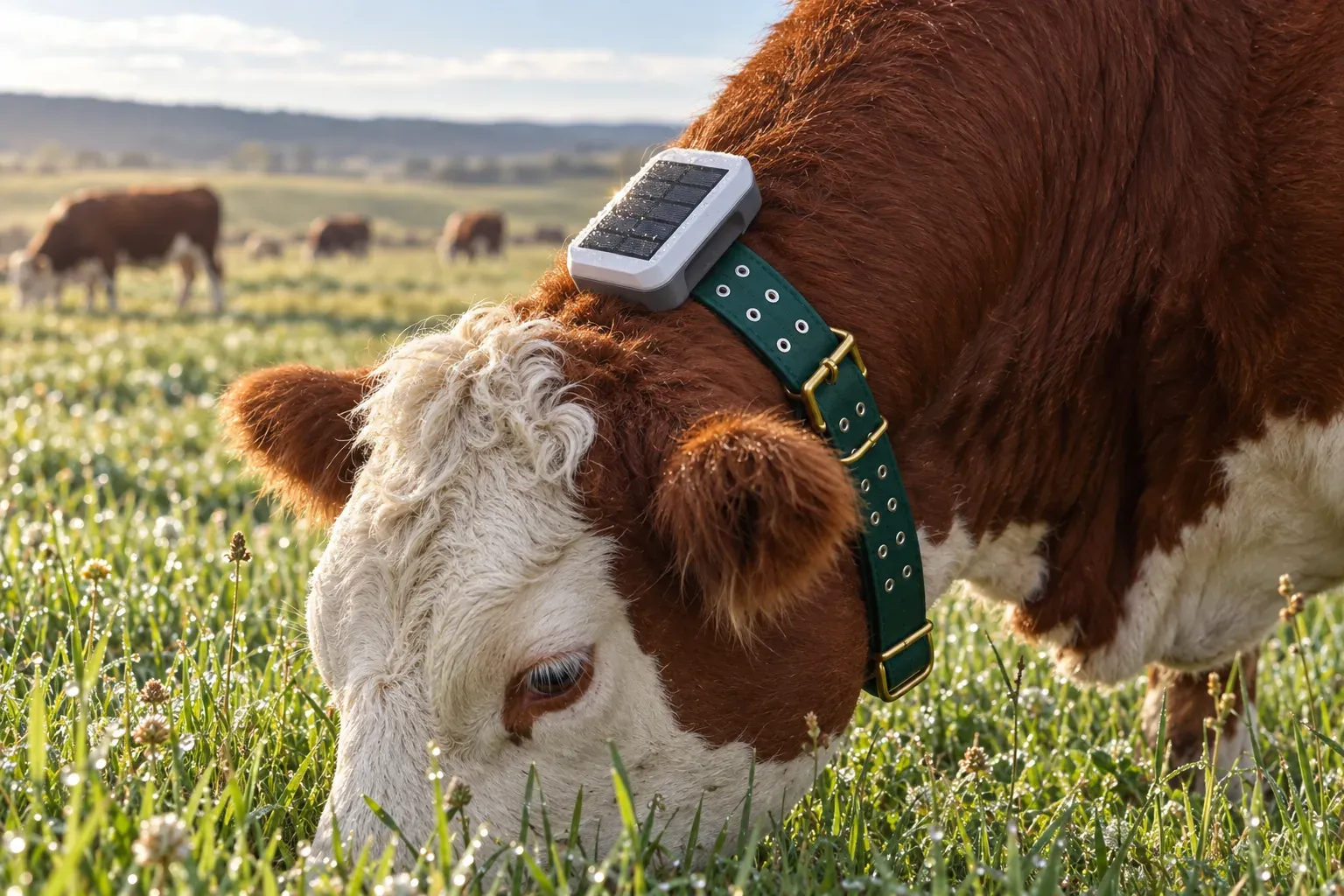
- A sensor that measures acceleration forces along one or more axes. In livestock monitoring, 3-axis accelerometers in some collars and tags detect activity patterns and posture changes and classify behaviors like walking, resting, feeding, and ruminating.
- Activity Index
- A normalized score representing an animal's movement level over a defined period, typically compared to its own baseline. Elevated activity can indicate estrus; reduced activity can signal illness or lameness.
- AES-128 Encryption
- Advanced Encryption Standard with a 128-bit key length. A widely used symmetric encryption algorithm that protects data — including wireless sensor transmissions — from unauthorized interception.
B
- Behavioral Baseline
- A statistical model of an individual animal's normal behavior patterns across 24-hour cycles. Established during a learning period (typically 7-14 days), used as the reference for detecting deviations that may indicate health or reproductive events.
- BRD (Bovine Respiratory Disease)
- The most common and economically significant disease in North American beef cattle. Characterized by fever, nasal discharge, cough, and reduced appetite. IoT sensors can detect early BRD indicators through temperature elevation and behavioral changes 48-72 hours before visible symptoms.
C
- Calving Interval
- The number of days between successive calvings for an individual cow. Optimal calving interval is 12-13 months. Extended intervals increase feed cost per calf and reduce lifetime productivity.
- Calving Prediction
- Using behavioral and physiological data (decreased activity, temperature drop, restlessness patterns) to estimate when a cow will calve. Advanced systems can predict calving within a 12-24 hour window.
- CAPEX (Capital Expenditure)
- Upfront purchase of equipment as a capital asset. In livestock monitoring, this means buying sensors, gateways, and infrastructure outright — as opposed to subscription-based models where hardware is included in the monthly fee.
E
- Edge Computing
- Processing data at or near the source (e.g., at the gateway level) rather than sending all raw data to the cloud. In livestock monitoring, edge computing enables critical alert generation even when cloud connectivity is unavailable.
- Estrus (Heat)
- The period of sexual receptivity in female cattle, typically lasting 8-18 hours. During estrus, cows display behavioral changes including increased activity, mounting behavior, and standing to be mounted. Accurate detection is critical for artificial insemination timing.
- Estrus Detection Rate
- The percentage of actual estrus events that are successfully identified. Visual observation typically achieves 50-60%, while automated multi-sensor systems report 85-95% detection rates.
F
- False Positive
- An alert generated when no actual event occurred — for example, an estrus alert triggered by stress-related activity rather than actual heat. Multi-sensor systems reduce false positives by requiring confirmation across multiple data streams.
G
- Gateway
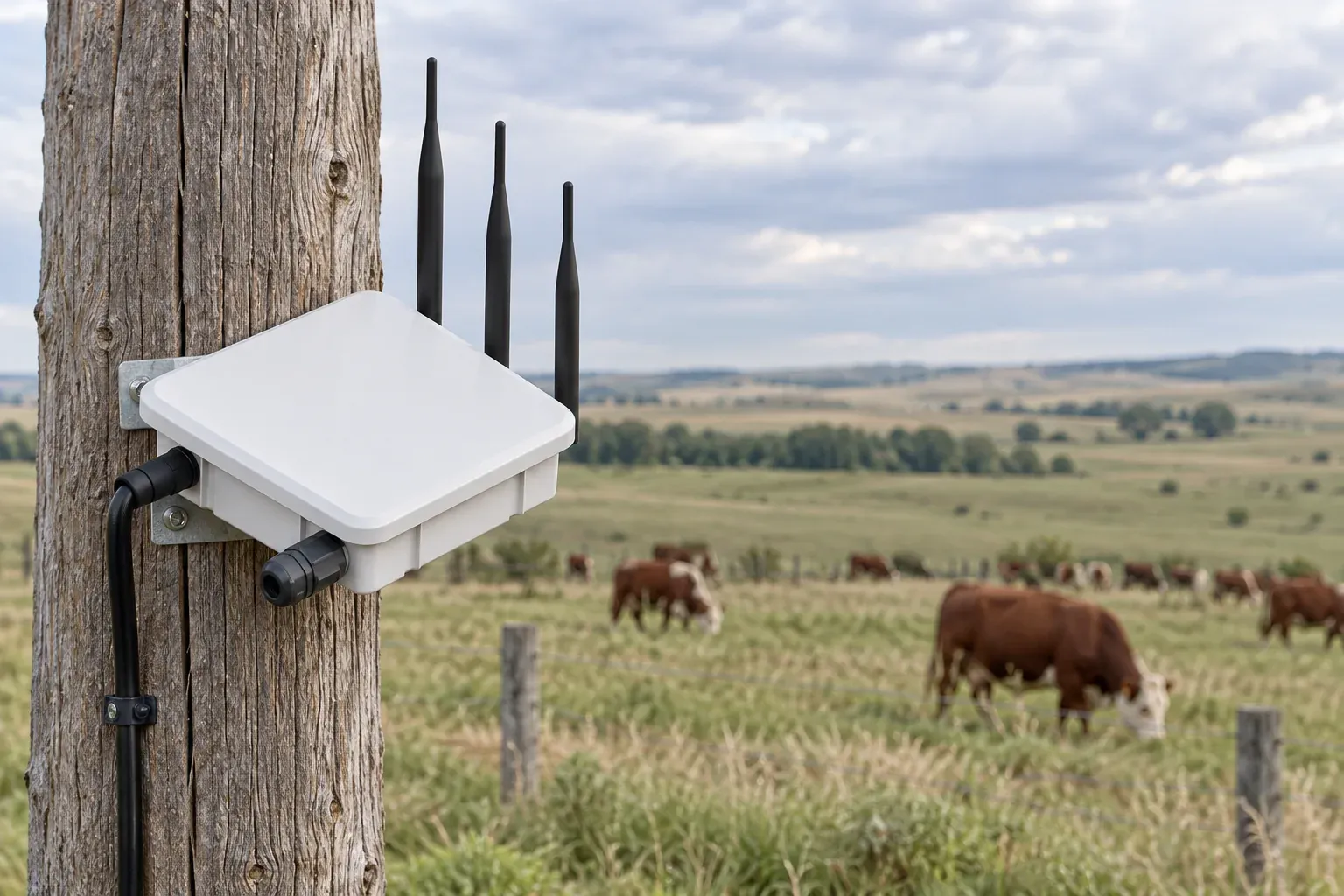
- A network device that receives transmissions from sensors and devices within range and forwards the data to the cloud platform. The Herdwize LoRa gateway covers a 5 km radius in open areas and connects to the cloud over wired Ethernet.
- Geofencing
- Creating virtual boundaries on a GPS map and generating alerts when an animal crosses them. Used for boundary monitoring, rotational grazing management, and theft/predator detection.
H
- Health Risk Score
- A computed score (typically 0-100) representing the probability that an animal is developing a health issue, based on deviations from behavioral and physiological baselines. Higher scores trigger prioritized alerts.
I
- IoT (Internet of Things)
- A system of connected physical devices that collect and exchange data via networks. In precision livestock farming, IoT refers to sensor tags, gateways, and cloud platforms working together to monitor animals.
- IP67
- An ingress protection rating indicating a device is completely dust-tight and can withstand immersion in water up to 1 meter for 30 minutes. Standard requirement for livestock sensing devices exposed to weather, mud, and wash-down procedures.
L
- LoRa
- Long Range — a low-power, long-range radio technology that uses spread-spectrum modulation on unlicensed spectrum to send small amounts of data over several kilometres. Herdwize collars and farm sensors use LoRa with a private protocol to reach the Herdwize gateway, covering about a 5 km radius in open areas.
M
- Mastitis
- Inflammation of the mammary gland in dairy cattle, typically caused by bacterial infection. The most costly disease in dairy farming. IoT sensors can detect early mastitis indicators through changes in rumination time, activity levels, and body temperature.
- Multi-Sensor Fusion
- Combining data from multiple sensor types to create a more complete and accurate assessment of animal state than any single sensor could provide. Herdwize combines body temperature, activity, and GPS location.
O
- OPEX (Operational Expenditure)
- Ongoing operational costs, typically monthly or annual. In subscription-based livestock monitoring, hardware, software, support, and replacements are bundled into a predictable per-head monthly fee.
P
- PLF (Precision Livestock Farming)
- The application of technology (sensors, data analytics, automation) to monitor and manage individual animals within a herd, enabling data-driven decisions about health, reproduction, nutrition, and welfare.
- Predictive Analytics
- Using historical and real-time data to forecast future events. In livestock monitoring, this includes predicting estrus timing, calving dates, disease onset, and feed efficiency outcomes.
R
- Rumination
- The process of rechewing previously swallowed food (cud). Dairy cows typically ruminate 6-10 hours per day. Significant decreases in rumination time can indicate digestive disorders, metabolic disease, heat stress, or approaching calving.
- Rumination Monitoring
- Tracking the duration and pattern of an animal's rumination behavior using accelerometer sensors. Changes in rumination patterns are among the earliest indicators of health issues, often appearing before changes in activity or body temperature.
S
- Silent Heat
- An estrus cycle with ovulation but minimal or no visible behavioral signs. Silent heats account for 10-25% of estrus cycles and are nearly undetectable through visual observation but can be identified through automated sensor systems that detect subtle physiological changes.
- Standing Heat
- The definitive behavioral sign of estrus — when a cow stands immobile while being mounted by another cow. This behavior is the most reliable visual indicator for timing artificial insemination.
- Subscription Model
- A pricing structure where livestock monitoring hardware, software, network infrastructure, and support are bundled into a recurring per-head monthly fee, eliminating large upfront capital expenditures.
T
- Telemetry
- The automated collection and wireless transmission of measurements from remote sensors. In livestock monitoring, telemetry refers to the continuous stream of temperature, activity, location, and behavioral data from animal-mounted devices.
Ready to Deploy Livestock Intelligence?
Schedule a platform briefing to discuss deployment scope, infrastructure requirements, and expected ROI for your operation.