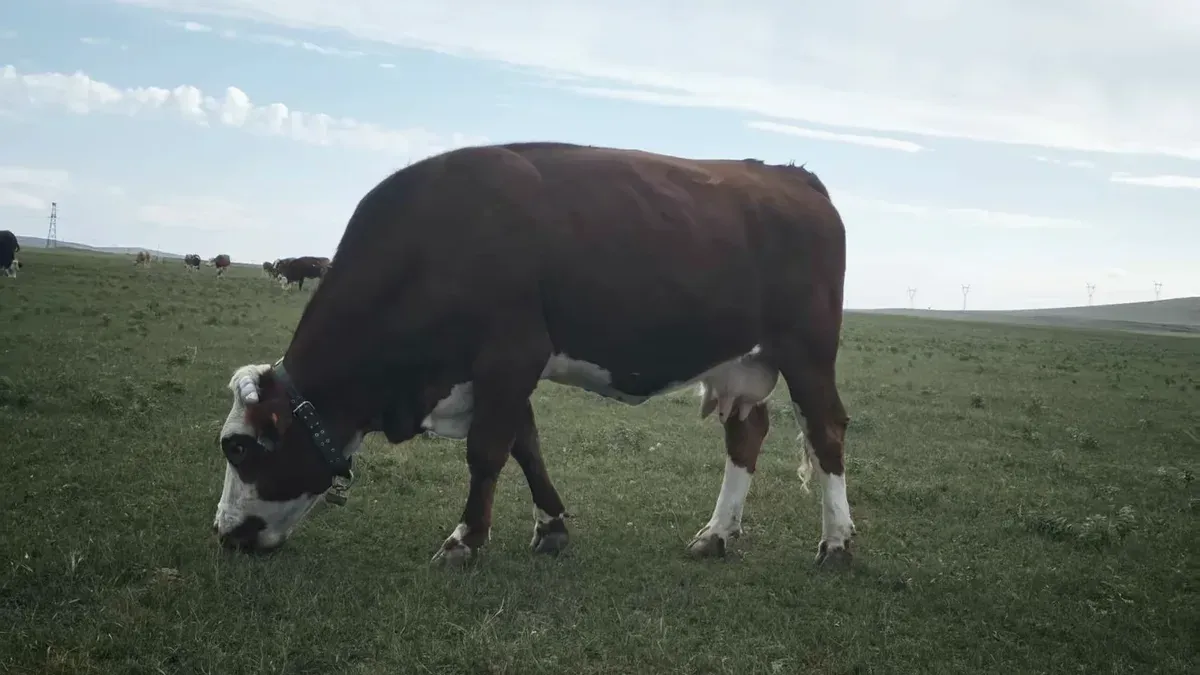
Key Takeaways
- A herd activity monitoring solution tracks movement, rumination, feeding, and rest patterns to detect health, reproductive, and behavioral events 24-72 hours before visual observation
- Full intelligence platforms achieve 92% estrus detection accuracy and predict illness 48-72 hours early, compared to 50-60% accuracy from activity-only monitors
- Commercial operations deploying multi-sensor monitoring consistently report 3:1 to 7:1 ROI through reduced missed heats, earlier treatment, and labor reallocation
- Dairy and beef deployments differ significantly in network topology, sensor density, and priority metrics — one-size-fits-all systems underperform in both environments
- Private LoRa networks cover a 5 km radius per gateway in open areas, and adding gateways as needed makes full-herd coverage feasible even on extensive operations
A herd activity monitoring solution is an integrated system of sensors, connectivity infrastructure, and analytics software that continuously tracks the movement, behavior, and physiological patterns of individual animals within a herd. Unlike manual observation, which captures a snapshot of animal behavior during brief check intervals, a herd activity monitoring solution operates 24/7 — recording activity levels, rumination time, feeding behavior, rest patterns, and temperature data that collectively reveal the health, reproductive status, and welfare of every animal in real time.
For commercial livestock producers, the shift from periodic visual observation to continuous behavioral monitoring represents more than a technology upgrade. It is a fundamental change in management capability. Problems that previously went undetected for days — a cow in standing heat overnight, a feeder steer developing respiratory disease, a calving cow in distress on distant pasture — become visible the moment behavioral patterns deviate from baseline. The result is earlier intervention, better outcomes, and measurable economic returns across every major value driver in the operation.
This article provides a comprehensive guide to evaluating and deploying a herd activity monitoring solution — comparing the three major categories of monitoring systems, analyzing the ROI for dairy and beef operations, and providing deployment checklists for both production types.
What a Herd Activity Monitoring Solution Actually Measures
The term "activity monitoring" is used broadly in the livestock technology market, but not all systems measure the same things. Understanding what data a herd activity monitoring solution captures — and what it does not — is critical for evaluating which system fits your operation.
At the most basic level, activity monitors track movement intensity using accelerometers. Increased activity relative to baseline can indicate estrus, while decreased activity may signal illness or lameness. However, activity alone is a blunt instrument. Many conditions produce similar activity changes, and environmental factors like weather, pen changes, and social disruption create noise that reduces detection accuracy.
More advanced systems add body temperature sensing, GPS location, rumination or feeding behavior tracking (offered by some vendors), and analytics that compare each animal against its own baseline. This multi-sensor approach dramatically improves detection specificity — the system can distinguish between a cow that is active because she is in heat and a cow that is active because she was just moved to a new pen.
Comparison: Three Categories of Herd Activity Monitoring Solutions
The market for herd activity monitoring solutions broadly segments into three tiers, each with distinct capabilities, cost structures, and best-fit use cases. Understanding these categories prevents the common mistake of buying more or less system than the operation requires.
| Feature | Activity-Only Monitors | Multi-Sensor Platforms | Full Intelligence Platforms |
|---|---|---|---|
| Metrics tracked | Movement intensity only | Activity, rumination, temperature | Activity, body temperature, GPS location, individual baselines, environmental and herd-level context |
| Detection accuracy | 50-65% estrus, basic health alerts | 80-88% estrus, 24-48 hr health prediction | 90-95% estrus, 48-72 hr health prediction |
| Alert types | Heat alerts, basic low-activity flags | Heat, health risk, calving proximity, feed disruption | Heat, predictive health, calving prediction, feed efficiency, lameness, group analytics |
| Data depth | Daily activity index | Hourly behavioral profiles | Continuous multi-dimensional behavioral signatures with AI pattern recognition |
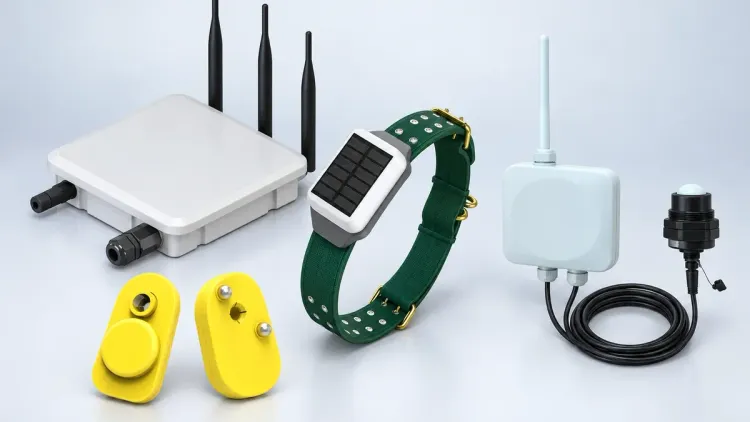
| Hardware | Pedometer or basic collar | Smart collar or eartag | Temperature and activity eartag + GPS collar + private LoRa gateway |
| Typical cost | $30-$60/head | $80-$150/head | $100-$200/head (or subscription model) |
| Best for | Small herds with simple heat detection needs | Mid-size dairy and beef operations | Commercial operations seeking maximum ROI across health, reproduction, and efficiency |
The critical distinction between these tiers is not just the number of metrics tracked, but the analytical depth applied to the data. Activity-only monitors report raw movement levels and flag deviations from threshold values. Full intelligence platforms like Herdwize's multi-sensor system apply machine learning models that consider the interaction between multiple behavioral streams, individual animal baselines, environmental context, and historical patterns to generate high-confidence predictions rather than simple threshold alerts.
Core Features That Drive Value
When evaluating any herd activity monitoring solution, commercial producers should focus on the features that directly impact the operation's key performance indicators: conception rate, treatment cost, mortality rate, labor efficiency, and overall cost per unit of production.
Automated Estrus Detection
Missed heats are the single most expensive reproductive failure in both dairy and beef operations. Each missed estrus event costs $50-$150 in extended calving intervals, additional semen and labor, and lost production days. Visual observation detects only 40-55% of heats under typical farm conditions, and the rate drops further for cows that cycle overnight or express silent heats. A herd activity monitoring solution with multi-sensor capability detects 90-95% of estrus events, including those occurring between midnight and 5 AM when no staff is present. At 200 breeding animals, improving detection from 50% to 92% captures an additional 84 heats per cycle — each one worth $50-$150 in avoided reproductive delay.
Predictive Health Alerts
The economic value of early disease detection compounds across treatment cost, mortality reduction, and performance recovery. An animal identified and treated 48-72 hours before clinical symptoms responds faster to treatment, requires fewer re-treatments, and returns to baseline performance sooner than one treated after visible illness. For conditions like bovine respiratory disease (BRD), early detection reduces treatment costs by 30-50% and mortality by 40-60%. Across a 1,000-head feedlot, this translates to $15,000-$40,000 in annual savings from health management alone.
Calving Prediction
Continuous monitoring of temperature drops, activity surges, and rumination declines provides 6-12 hour calving prediction windows at 85%+ accuracy. This eliminates the need for round-the-clock visual surveillance during calving season and ensures timely intervention for dystocia cases — reducing calf mortality by 50-70% and eliminating the exhausting overnight check schedule that burns out farm staff every spring.
Feed Efficiency Monitoring
Rumination time and feeding behavior patterns serve as real-time proxies for digestive health. Drops in rumination indicate subclinical acidosis (SARA), ration intolerance, or digestive upset hours before feed intake visibly declines. For feedlot operations, this early signal enables ration adjustments that prevent 5-15% feed efficiency losses that would otherwise go undetected until weigh day.
ROI Analysis: What a Herd Activity Monitoring Solution Returns
The return on investment from a herd activity monitoring solution depends on operation type, herd size, and which value drivers matter most to the specific business. However, the economics are consistent enough across published research and producer reports to establish reliable benchmarks. For a detailed financial analysis, see our complete livestock monitoring ROI analysis.
Annual Value Summary — 500-Head Dairy Operation
Against a typical system cost of $50,000-$80,000 for a 500-head dairy deployment (including hardware, gateways, and first-year subscription), the payback period ranges from 10-18 months. Over a 5-year system life, the cumulative ROI reaches 3:1 to 7:1 depending on the operation's baseline management level. Operations with lower starting detection rates and higher disease incidence see the fastest returns. For a detailed breakdown by operation type and size, visit our ROI calculator and analysis page.
Implementation for Dairy and Beef Operations
While the underlying technology is the same, deploying a herd activity monitoring solution in a dairy operation versus a beef operation involves fundamentally different considerations in network design, sensor selection, and priority metrics. One-size-fits-all deployments consistently underperform because they fail to account for these operational differences.
Dairy Deployment Considerations
Dairy operations typically feature higher animal density, more controlled environments, and a greater emphasis on reproductive efficiency and milk production optimization. The deployment model reflects these characteristics:
- Network topology: Freestall barns, milking parlors, and holding areas concentrate animals within gateway range. One or two LoRa gateways typically cover the entire dairy facility, with additional gateways for dry cow pastures or heifer development areas
- Priority metrics: Estrus detection accuracy is the primary value driver, followed by temperature and activity monitoring for transition cow management and early mastitis or metabolic disease detection
- TMR integration: Behavioral data supports ration management — shifts in group activity and temperature after TMR changes give early feedback on nutritionist adjustments, rather than waiting a week for milk test results
- Sensor type: Smart eartags (9–12.5 g, IP67, 2–4 year battery) are preferred in dairy for durability through milking equipment and headlocks. Collars provide additional GPS capability for pasture-based dairy systems
- Data integration: The monitoring platform connects with herd management software and milking systems for unified animal records
Beef Deployment Considerations
Beef operations — feedlot, cow-calf, and range — present the opposite deployment profile: lower density, more extensive land areas, and value drivers weighted toward health management and feed efficiency rather than reproductive timing.
- Network topology: Feedlots require gateway placement that covers pen alleys and hospital areas. Cow-calf and range operations need distributed gateways — each Herdwize LoRa gateway covers a 5 km radius in open areas, and extra units placed on high ground fill in where hills or tree lines block the signal
- Priority metrics: BRD and respiratory disease detection is the primary value driver in feedlots. For cow-calf operations, calving prediction and calf mortality reduction dominate the ROI calculation
- Feedlot specifics: Step-up ration monitoring during the receiving and adaptation period is critical — continuous activity and temperature data help flag subclinical acidosis that costs $54/head in excess feed consumption over a 150-day feeding period
- Cow-calf specifics: GPS-enabled collars track cow location on extensive pastures, and activity data identifies calving onset, enabling targeted checks rather than whole-pasture surveillance
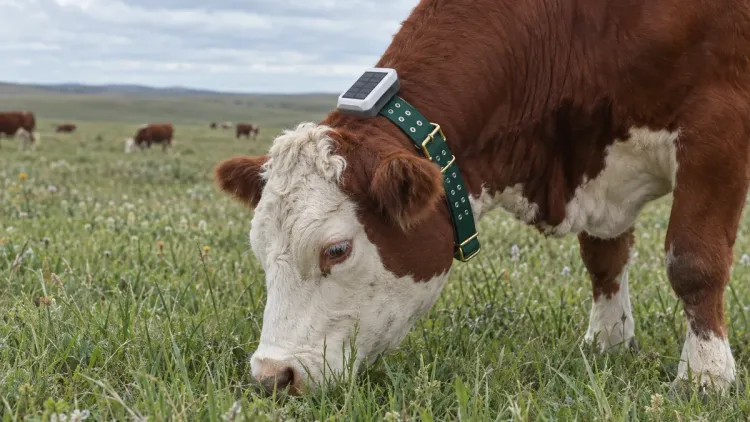
- Range operations: Solar-powered collars and sealed, IP67-rated hardware are non-negotiable for year-round deployment on exposed rangeland
Deployment Checklist
Whether deploying in a dairy or beef environment, the following checklist ensures a successful herd activity monitoring solution implementation:
Pre-Deployment Planning
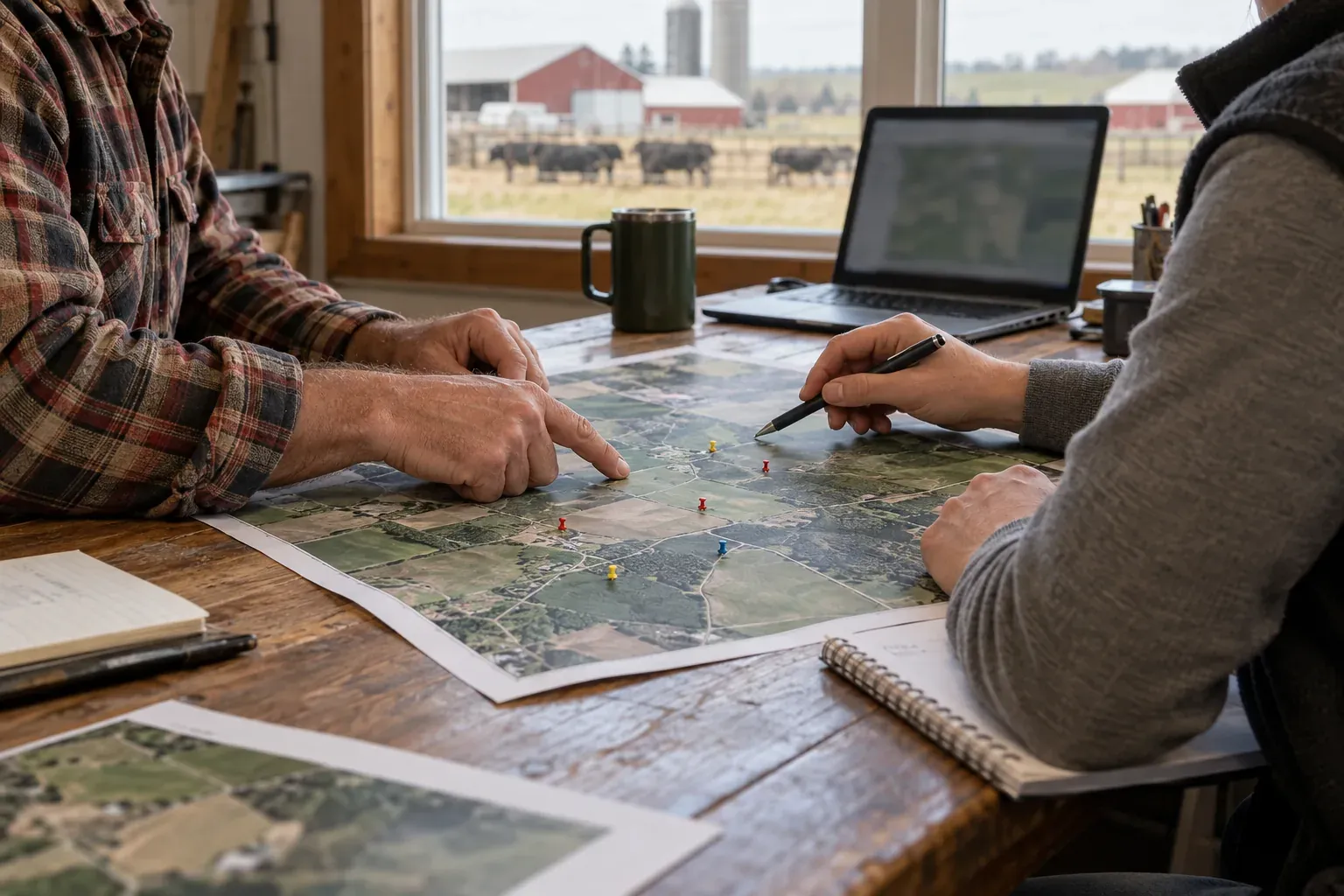
- Conduct a connectivity survey — map terrain, buildings, and potential RF obstructions to determine optimal gateway placement and confirm LoRa coverage across all animal areas
- Define priority metrics and alert thresholds based on your operation's primary value drivers (reproduction, health, feed efficiency, or labor reduction)
- Inventory existing infrastructure — power availability for gateways, internet connectivity for data upload, and integration requirements with current herd management software
- Establish baseline performance metrics (current heat detection rate, treatment timing, mortality rate) so post-deployment ROI can be measured objectively
Hardware Deployment
- Install gateways at elevated positions with clear line-of-sight to animal areas — barn rooftops, grain legs, or dedicated mast structures provide optimal coverage
- Tag or collar animals systematically — process through handling facilities during routine events (vaccination, pregnancy checks) to minimize additional stress and handling
- Verify individual tag connectivity before releasing animals — confirm each sensor is reporting to the gateway and registering in the platform dashboard
- Deploy in phases for large herds — start with the highest-value group (breeding herd, receiving pen, fresh cows) and expand after validating system performance
Post-Deployment Optimization
- Allow 7-14 days for individual animal baselines to establish before relying on alert accuracy — the system needs behavioral history to generate meaningful deviation alerts
- Review and refine alert sensitivity after the first 30 days — overly sensitive thresholds generate false positives that erode staff trust, while overly permissive thresholds miss events
- Train all staff who will act on alerts — the system generates value only when alerts translate into timely management actions
- Schedule quarterly performance reviews comparing pre- and post-deployment metrics against the operation's baseline and against industry benchmarks
What to Look for in a Herd Activity Monitoring Solution
With dozens of vendors marketing monitoring products, commercial producers should evaluate prospective systems against criteria that determine long-term value rather than feature-list length:
- Sensor battery life: Short battery life and frequent device replacement create ongoing labor and cost burdens. Herdwize's Smart Eartag runs 2–4 years on a button cell, sized so the battery never needs replacing while the tag is on the animal, and its solar-powered GPS collars have a 5-year service life and run continuously with at least 4 hours of daily sunlight
- Network independence: Cellular-dependent systems incur ongoing data fees and fail in areas with poor coverage. A private LoRa network covers a 5 km radius per gateway in open areas, with no per-device data plans and no dependence on carrier infrastructure
- Multi-metric capability: Activity-only systems cannot distinguish between behavioral changes caused by different conditions. Multi-sensor platforms combining activity, body temperature, and individual baselines deliver the detection specificity required for actionable alerts
- Data ownership: Operations should retain full ownership of their herd data. Cloud-locked platforms that restrict data export or charge for historical access create vendor dependency that limits future flexibility
- Scalability: The network should grow with the herd without degradation or a redesign. Each Herdwize gateway serves the collars and sensors within its range, and additional gateways extend coverage as the operation grows
Frequently Asked Questions
What is the difference between an activity monitor and a herd activity monitoring solution?
How long does it take to deploy a herd activity monitoring solution across a 500-head operation?
Can a herd activity monitoring solution work on extensive range operations without cellular coverage?
What ROI can I expect from a herd activity monitoring solution in the first year?
How does a herd activity monitoring solution handle false positives and alert fatigue?
Evaluate a Herd Activity Monitoring Solution for Your Operation
Learn how Herdwize's multi-sensor platform delivers 92% detection accuracy, 48-72 hour predictive alerts, and documented 3:1-7:1 ROI for dairy and beef operations.
Request a Platform Briefing