Key Takeaways
- GPS, RFID, and activity/health monitoring solve fundamentally different problems — choosing the wrong technology means paying for capabilities you do not need while missing the ones you do
- GPS tracking provides real-time location but costs $80-$200 per head with 1-3 year battery life, making it viable primarily for extensive range operations
- Passive RFID identifies animals at read points only and cannot continuously monitor health, behavior, or location between scans
- Multi-sensor eartags capture body temperature and activity 24/7 at a fraction of GPS cost, enabling predictive health and fertility alerts
- Most commercial operations benefit from a layered approach — combining RFID identification with continuous health monitoring, and adding GPS only where extensive grazing demands it
Ask ten cattle producers what "herd tracking" means and you will get ten different answers. Some think of GPS dots on a map. Others picture RFID tags scanned at a chute. Still others mean the real-time health and behavior dashboards that modern sensor platforms deliver. The term has become a catch-all that conflates three distinct capabilities — location tracking, identification, and continuous health monitoring — each served by a different technology with different costs, infrastructure requirements, and operational value.
This confusion is not academic. Producers who invest in GPS tracking when their actual problem is missed heats or late disease detection waste capital on the wrong tool. Conversely, operations running cattle across thousands of acres of open range genuinely need location intelligence that RFID and activity monitors cannot provide.
This article breaks down the three primary herd tracking technologies — GPS, RFID, and activity/health monitoring — with a head-to-head comparison across the criteria that matter for commercial operations.
What "Herd Tracking" Actually Means
Before evaluating technologies, it helps to separate the three capabilities that producers commonly lump under "tracking":
- Location tracking — knowing where each animal is in real time or near-real time, typically via GPS coordinates plotted on a map
- Identification — confirming which animal is at a specific point (chute, gate, milking parlor) at a specific moment, typically via RFID
- Behavioral and health monitoring — continuously measuring what an animal is doing (ruminating, resting, walking, eating) and how its physiology is trending (body temperature, activity intensity), typically via multi-sensor ear tags or collars
Each capability addresses different management questions. Location tracking answers "where is animal #247 right now?" Identification answers "which animal just entered the chute?" Health monitoring answers "is animal #247 getting sick, coming into heat, or about to calve?" Understanding which questions matter most for your operation is the first step toward choosing the right technology.
GPS Tracking: Strengths and Limitations
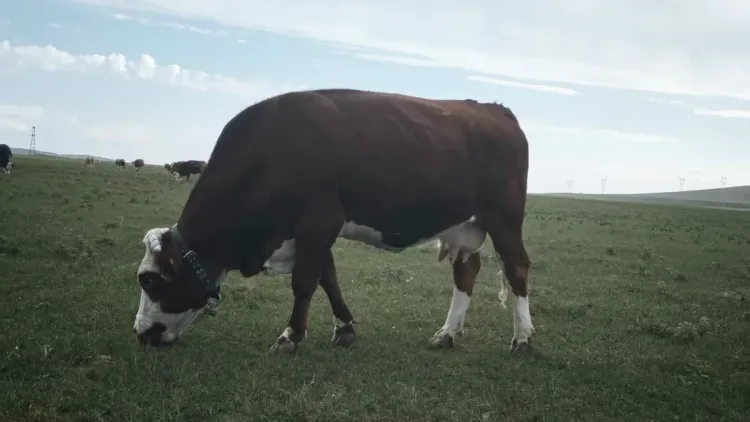
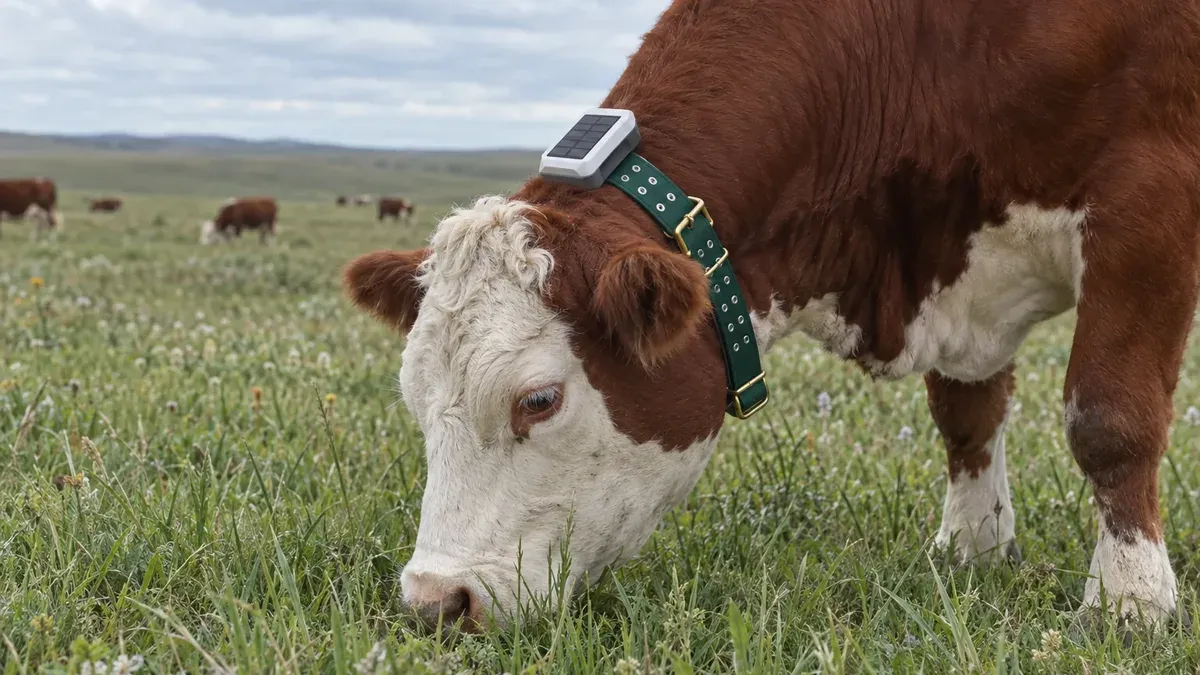
GPS (Global Positioning System) tracking uses satellite-based positioning to determine an animal's latitude and longitude at regular intervals. In livestock applications, GPS receivers are typically embedded in collars rather than ear tags due to the antenna size and power requirements involved.
What GPS Does Well
- Real-time location — position updates every 5-60 minutes depending on configuration, accurate to 2-5 meters
- Geofencing — automated alerts when animals cross defined boundaries, critical for open-range and leased-land operations
- Grazing pattern analysis — historical movement data reveals pasture utilization, water source visits, and herd distribution
- Theft and escape detection — immediate notification when animals leave the property
Where GPS Falls Short
GPS tracking carries significant trade-offs that limit its applicability for many operations:
GPS's power consumption is the fundamental constraint. Acquiring a satellite fix requires significant energy, and more frequent position updates drain batteries faster. Producers face a direct trade-off between update frequency and battery life: a collar reporting every 5 minutes may last 6 months, while one reporting every 60 minutes can stretch to 2-3 years with solar assist.
More critically, GPS tells you where an animal is but not how it is doing. A GPS dot on a map looks the same whether the cow is healthy and grazing or feverish and isolated. For operations where health management and reproductive efficiency are the primary economic drivers, GPS alone delivers limited ROI.
RFID: Identification vs Tracking
RFID (Radio Frequency Identification) is often grouped with "tracking" technologies, but this is misleading. RFID is fundamentally an identification technology — it confirms which animal is at a specific location at a specific moment. It does not continuously track position, health, or behavior.
Passive vs Active RFID
There are two categories of RFID relevant to livestock:
- Passive RFID — the tag has no battery and is powered by the reader's radio signal. Read range is limited to 0.3-1.5 meters. This is the technology in standard electronic ear tags (EID) and is mandated for traceability in many jurisdictions. Cost: $1-$5 per tag.
- Active RFID — the tag has its own battery and can transmit at distances of 10-100 meters. Used in some automated sorting systems and zone-detection setups. Cost: $15-$40 per tag, with 2-5 year battery life.
RFID Use Cases
Passive RFID excels in scenarios where animals pass through fixed infrastructure:
- Chute-side identification — automatically recording which animal is being processed, eliminating manual ID errors
- Automated sorting gates — directing animals to different pens based on pre-defined criteria (treatment group, pregnancy status, market weight)
- Parlor identification — recognizing each cow entering the milking stall to apply individual milking protocols
- Regulatory traceability — meeting national livestock identification requirements (CCIA in Canada, NAIS in the US)
What RFID Cannot Do
The critical limitation of RFID is that it provides data only at read points. Between scans, the animal is invisible to the system. RFID cannot detect a cow coming into heat at 2 AM in the pasture, identify a steer developing BRD three days before clinical signs, or alert you to a calving in progress in the back paddock. For continuous monitoring, a different technology is required.
Activity and Health Monitoring: Beyond Location
Activity and health monitoring represents the newest and most data-rich category of herd tracking technology. Rather than answering "where is this animal?" or "which animal is this?", multi-sensor devices answer the more economically valuable question: "how is this animal doing right now, and what is likely to happen next?"
What Multi-Sensor Eartags Capture
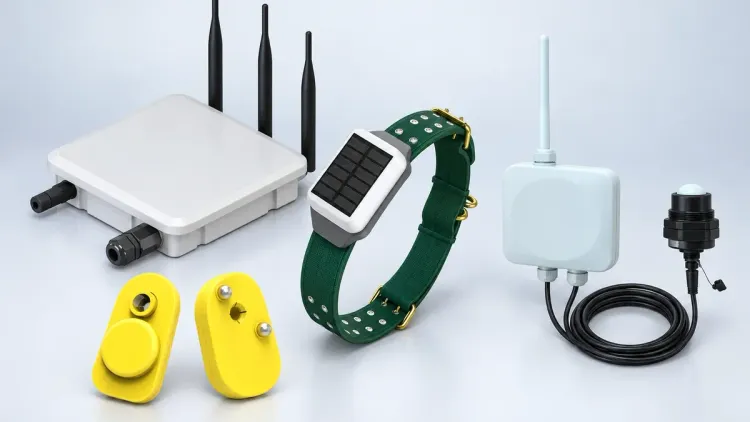
Modern smart eartags like the Herdwize Smart Eartag pack complementary sensing into a 9–12.5 gram device:
- Integrated pedometer — counts steps to track activity levels and rest periods, revealing behavioral changes associated with estrus, illness, lameness, and calving
- Surface temperature sensor — tracks ear temperature trends that correlate with fever, metabolic stress, and reproductive events
- Headcount and inventory — each tag reports to the Herdwize platform through the gateway, so the system knows which tagged animals are present
The economic value of health monitoring comes from early intervention. Detecting bovine respiratory disease 48-72 hours before clinical symptoms allows treatment when first-line antibiotics are still effective, reducing treatment costs by 40-60% and cutting mortality rates significantly. Similarly, automated estrus detection at 92% accuracy catches silent heats that visual observation misses, tightening calving intervals and improving reproductive efficiency.
For operations that also need location intelligence, the Herdwize GPS collar adds GPS positioning (1–5 m depending on model) to pedometer-based activity monitoring in a single solar-powered device that runs continuously with at least 4 hours of daily sunlight — bridging the gap between pure health monitoring and location tracking.
Head-to-Head Comparison
The following table compares GPS, RFID, and activity/health monitoring across the eight criteria that matter most when evaluating herd tracking technologies for commercial operations.
| Criteria | GPS Tracking | RFID (Passive) | Activity/Health Monitoring |
|---|---|---|---|
| Location accuracy | 2-5 m (continuous) | Read point only (0.3-1.5 m range) | Not location-based; 1–5 m with GPS collar |
| Battery life | 1-3 years (collar) | No battery (passive) | 2–4 years (eartag) |
| Cost per head | $80-$200 (hardware) | $1-$5 per tag | $15-$40 per eartag |
| Communication range | Satellite (global) | 0.3-1.5 m (reader proximity) | 5 km radius per gateway (open areas) |
| Data types | Location, speed, geofence events | Animal ID, timestamp | Temp, activity, behavior trends |
| Infrastructure needed | Cellular or satellite backhaul | Readers at fixed points | Private LoRa gateway(s) on site |
| Labor reduction | Moderate (fewer visual checks) | Moderate (automated sorting) | High (automated health + fertility alerts) |
| Best use case | Extensive range, theft prevention | Traceability, chute-side ID, sorting | Health, fertility, and performance management |
Which Technology Fits Your Operation?
The right technology depends less on what is technically impressive and more on what management challenge drives the most economic loss in your specific operation. Here is a decision guide by operation type:
Extensive Ranch Operations (1,000+ acres)
When cattle are distributed across vast rangeland with limited daily visual contact, location intelligence becomes operationally essential. GPS tracking answers the daily question of "where are my cattle?" while health monitoring ensures you detect problems before they become emergencies. The recommended approach is GPS collars on lead cows or high-value breeding stock combined with health-monitoring eartags across the full herd. Learn more about ranch-specific solutions.
Feedlot and Beef Operations
In confined feeding operations, location tracking adds minimal value — you know where the animals are. The critical challenge is early disease detection, particularly BRD, which accounts for an estimated 65-80% of feedlot morbidity and costs the North American beef industry over $900 million annually. Health monitoring eartags that detect fever and decreased activity 48-72 hours before clinical signs deliver the highest ROI. Explore beef operation solutions.
Dairy Operations
Dairy operations have two dominant technology needs: reproductive management and health monitoring. Missed heats cost dairy producers an estimated $3-$5 per cow per day of extended calving interval. Automated estrus detection through continuous activity monitoring captures 90%+ of heats — including silent heats at night — compared to 50-60% with visual observation alone. RFID plays a complementary role for parlor identification and automated milking protocols. See how monitoring integrates with dairy operations.
Breeding Operations
For seedstock and commercial breeding herds, reproductive efficiency is the primary economic driver. Activity monitoring with automated estrus alerts and calving prediction delivers the most direct return. GPS may be warranted for operations running bulls on extensive pastures where visual heat detection is impractical. RFID remains essential for pedigree management and regulatory compliance.
Can You Combine Technologies?
Yes — and the most effective commercial deployments do exactly that. Rather than choosing a single technology, progressive operations layer complementary capabilities:
- RFID for identification — every animal carries a passive EID tag for traceability, chute-side processing, and regulatory compliance. This is typically already mandated and costs $1-$5 per tag.
- Activity/health monitoring for the full herd — smart eartags on all animals provide 24/7 health, fertility, and behavior intelligence. At $15-$40 per head with a 2–4 year battery life, this delivers the broadest ROI.
- GPS for location-critical subsets — GPS collars on lead animals, bulls, or high-value individuals provide location intelligence where it is operationally necessary, without the cost of deploying GPS across every animal.
The key enabler of this layered approach is a unified network and data platform. When all sensor types report through a common infrastructure, data from different devices is correlated at the animal level. The Herdwize platform uses a private LoRa network as the unifying layer — eartags, LoRa GPS collars, and farm sensors all report through the same Herdwize gateway, eliminating the need for separate connectivity infrastructure per technology.
A private LoRa network is particularly well suited to this layered model because diverse device types share a single gateway infrastructure. One Herdwize LoRa gateway covering a 5 km radius in open areas receives data from the eartags, GPS collars, and water-level or soil sensors within its range — all with zero per-device data costs. For a deeper look at why private LoRa networks outperform cellular alternatives for this kind of deployment, see our LoRa for agriculture guide.
Cost Comparison: 5-Year Total Cost of Ownership
To make the economics concrete, here is a simplified 5-year total cost comparison for a 500-head operation deploying each technology independently versus a layered approach:
| Cost Component | GPS (all 500) | RFID Only | Health Monitoring | Layered (recommended) |
|---|---|---|---|---|
| Hardware (per head) | $80-$200 | $1-$5 | $15-$40 | $20-$50 avg |
| Total hardware | $40,000-$100,000 | $500-$2,500 | $7,500-$20,000 | $10,000-$25,000 |
| Replacement over 5 yrs | 1-2 cycles ($40k-$200k) | Minimal | No battery replacement (tags change only at animal turnover) | No eartag battery replacement; solar GPS collars (5-yr service life) |
| Network infra | Cellular data plans | Readers ($2k-$10k) | LoRa gateway ($1k-$4k) | LoRa gateway ($1k-$4k) |
| Data delivered | Location only | ID at read points | Health + fertility + behavior | Location + ID + health + fertility |
The layered approach — RFID on all animals, health-monitoring eartags on all animals, and GPS collars on 5-10% of the herd for location intelligence — delivers the broadest data coverage at a fraction of the cost of GPS-everywhere deployments. For most operations, total 5-year cost lands in the $12,000-$30,000 range for 500 head, compared to $80,000-$300,000 for full GPS deployment.
Frequently Asked Questions
Can GPS tracking detect health problems in cattle?
Do I still need RFID tags if I have smart eartags?
How accurate is GPS tracking for cattle on hilly terrain?
What is the best tracking technology for a 200-head cow-calf operation?
Not Sure Which Tracking Technology Fits Your Operation?
Request a free technology assessment. Our team will evaluate your operation type, herd size, and management goals to recommend the right combination of monitoring capabilities.
Request Technology Assessment