Key Takeaways
- Herd monitoring has evolved from visual observation to AI-powered multi-sensor platforms that continuously track every animal in a herd
- Modern systems detect health anomalies 48–72 hours before clinical symptoms, enabling proactive veterinary intervention
- Automated estrus detection achieves 90–95% accuracy compared to 50–60% for visual observation alone
- IoT-based herd monitoring reduces labor costs by 30–50% for observation-related tasks across dairy and beef operations
- A private LoRa network covers a 5 km radius in open areas from each gateway, enabling monitoring on remote pastures without cellular dependency
Herd monitoring is the practice of systematically observing, measuring, and recording the health, behavior, and physiological status of cattle within a production herd. In its modern form, herd monitoring uses IoT sensors, wireless networks, and AI-driven analytics to continuously track individual animals 24 hours a day — replacing periodic visual checks with real-time data streams that capture temperature fluctuations, activity patterns, rumination cycles, and reproductive signals. For commercial producers managing hundreds or thousands of head, effective herd monitoring is the difference between reactive management and proactive decision-making that protects margins and animal welfare.
This article explores how modern herd monitoring systems work, what they track, and how dairy, beef, and ranch operations are implementing this technology to improve health outcomes, reproductive efficiency, and operational profitability.
Why Herd Monitoring Matters for Commercial Cattle Operations
The economics of cattle production leave little room for undetected health events, missed breeding cycles, or preventable losses. A single missed estrus event costs dairy producers an average of $300–$500 in extended calving intervals and lost milk production. An undetected respiratory infection that progresses to clinical BRD costs $50–$150 per animal in treatment and permanently reduces growth performance. Across a 500-head operation, these hidden losses can exceed $100,000 annually.
Traditional herd monitoring — a skilled stockperson walking pens or pastures once or twice daily — has served the industry for generations. But it has fundamental limitations. Human observers can only evaluate animals during observation periods, which typically represent less than 2% of a cow's day. Many critical events, including 60–70% of estrus activity and the earliest signs of illness, occur outside these windows. As herd sizes have grown and experienced labor has become harder to find, the gap between what needs to be observed and what can be observed has widened.
The Evolution of Herd Monitoring Technology
Herd monitoring technology has progressed through four distinct stages, each expanding the scope and accuracy of what producers can track.
Visual Observation (Pre-2000)
For centuries, herd monitoring meant a stockperson's trained eye. Experienced cattlemen could spot a limping animal, a cow off feed, or subtle signs of estrus — but only during the time they spent among the animals. Research consistently shows that even skilled observers detect only 50–60% of estrus events and typically identify illness 24–48 hours after measurable behavioral changes begin. Visual observation remains valuable but is inherently limited by the fraction of the day it covers and the subjectivity of human assessment.
Simple Activity Monitors (2000–2012)
The first generation of automated herd monitoring devices were pedometers — step counters worn on the leg or neck that detected the increased activity associated with estrus. These systems improved heat detection rates to 70–80% but provided no health, rumination, or temperature data. Battery life was short (3–6 months), and the devices communicated over proprietary short-range protocols that limited deployment to confined facilities.
Multi-Sensor Platforms (2012–2020)
Second-generation monitoring added temperature sensors, rumination microphones, and improved accelerometers to the same device. This multi-channel approach enabled health event detection alongside estrus monitoring and reduced false positives by cross-referencing independent data streams. However, these systems typically relied on cellular or Wi-Fi connectivity, restricting deployment to operations with existing network infrastructure.
AI-Powered Intelligent Monitoring (2020–Present)
The current generation of herd monitoring combines multi-sensor hardware with machine learning algorithms trained on millions of animal-days of behavioral data. These systems learn each animal's individual baseline patterns, detect subtle multi-channel deviations, and generate predictive alerts — not just identifying that something is wrong, but forecasting events before they become clinically apparent. Combined with private LoRa networks that work without cellular coverage and subscription-based pricing, this generation has made comprehensive herd monitoring accessible to operations of all sizes and locations.
What Modern Herd Monitoring Systems Track
A comprehensive herd monitoring platform captures data across five core domains. The following table summarizes what is tracked, how it is detected, and the operational impact for each monitoring category.
| Monitoring Domain | What's Tracked | Detection Method | Alert Timing | Impact on Operations |
|---|---|---|---|---|
| Health monitoring | Body temperature, activity depression, rumination drops, feeding time changes | Multi-channel deviation from individual baseline via temperature + accelerometer sensors | 48–72 hours before clinical symptoms | Reduces treatment costs by 40–60%; lowers mortality by up to 50% |
| Reproductive monitoring | Estrus activity surges, mounting behavior, temperature spikes, restlessness patterns | Activity acceleration + temperature correlation + behavioral pattern recognition | Optimal AI window identified within 4 hours | Improves conception rates by 15–25%; eliminates missed heats |
| Behavioral monitoring | Daily activity budget, lying time, social interactions, grazing duration, gait anomalies | Continuous accelerometer profiling with AI pattern classification | Real-time deviation alerts from individual norms | Early lameness detection; identifies stress and welfare issues |
| Location tracking | GPS position, zone occupancy, movement corridors, separation from herd | GPS positioning via collar devices; zone detection via virtual geofence boundaries | Immediate alerts for fence breaches or isolation | Prevents losses from straying; identifies calving isolation behavior |
| Nutritional monitoring | Rumination minutes per day, feeding bout frequency, time at bunk/grazing | Jaw-movement accelerometry and feeding behavior classification | Daily rumination reports; acute drops flagged within hours | Detects subclinical acidosis; optimizes ration changes; recovers $15–$30/head |
How Sensor Hardware Powers Herd Monitoring
The foundation of any herd monitoring system is the sensor device attached to each animal. Modern platforms offer multiple form factors, each optimized for different monitoring priorities and operation types.
Smart Eartags
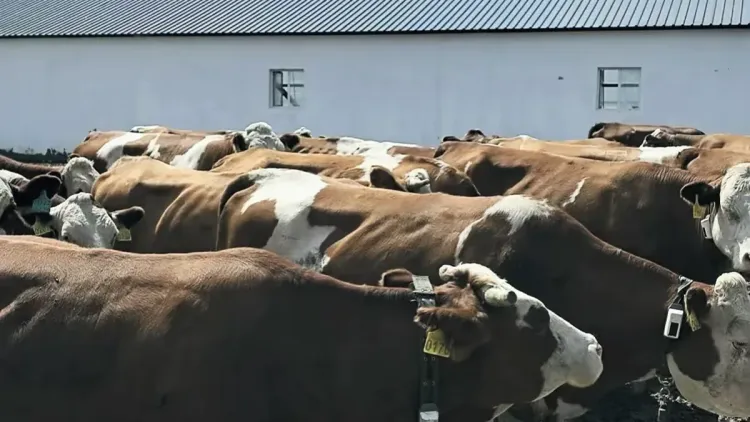
The smart eartag has emerged as the most versatile sensor form factor for comprehensive herd monitoring. Herdwize's Smart Eartag weighs just 9–12.5 grams depending on model — comparable to a standard visual ID tag. It incorporates an integrated pedometer that tracks activity as step counts, plus a temperature sensor for continuous body temperature monitoring. With an IP67 waterproof rating and a 2–4 year button-cell battery sized to outlast the animal's time on the tag, the device runs without maintenance or battery replacement — tags are replaced only when animals turn over.
The eartag form factor is particularly well suited for herd monitoring because it positions sensors close to the ear canal, providing more accurate temperature readings than collar- or leg-mounted devices. It also avoids the chafing, loss, and interference issues associated with collar and leg-band form factors, making it practical for both confined and pasture-based operations.
Smart Collars
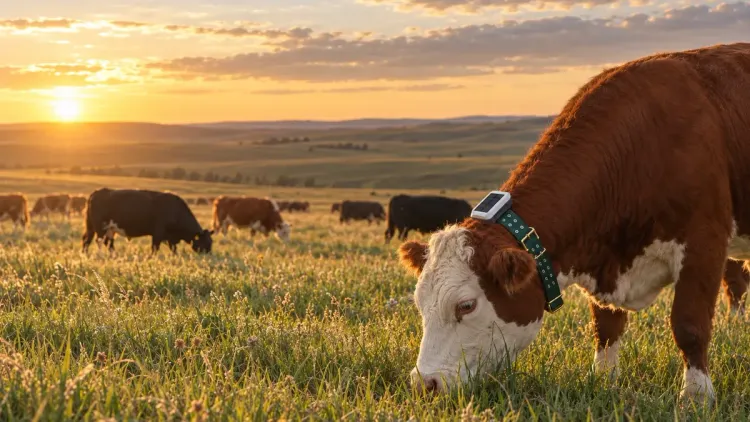
For operations that require GPS-based location tracking — particularly extensive grazing and ranch operations — Herdwize's GPS collar adds GPS positioning to the monitoring stack. Solar-powered with a 5-year service life and able to run continuously with at least 4 hours of daily sunlight, the collar reports positions every 1–30 minutes depending on model alongside pedometer-based activity monitoring, enabling geo-fencing, pasture utilization mapping, and location of animals across large properties.
The Network Layer: Private LoRa Infrastructure
Sensor data is only valuable if it reliably reaches the analytics platform. The Herdwize LoRa Gateway provides the network backbone, covering a 5 km radius in open areas from a single installation point and serving the collars and sensors within its range. Because the private LoRa network operates on unlicensed spectrum with farm-owned infrastructure, there are no per-device cellular fees and no dependency on carrier coverage — a critical advantage for the rural properties where most cattle operations are located.
From Data to Decisions: The Analytics Platform
Raw sensor data from thousands of devices generates millions of data points daily. The analytics platform transforms this data stream into prioritized, actionable intelligence through several processing stages.
First, the system establishes an individual behavioral baseline for each animal over a 7–14 day learning period, capturing that animal's unique patterns for activity, temperature, and daily rhythm. Once baselines are established, the platform continuously compares incoming data against each animal's normal profile, using multi-channel anomaly detection to identify deviations that correlate with health events, estrus, calving proximity, or environmental stress.
Machine learning models trained on millions of animal-days of historical data then classify these anomalies and generate risk scores. A sustained decrease in activity combined with an elevation in temperature might generate a health risk alert with 85%+ confidence — delivered to farm staff as a prioritized push notification indicating which animal, what the likely issue is, and what action is recommended.
This approach — individual baselines, multi-channel detection, and AI-powered classification — is what separates modern herd monitoring from the simple threshold-based alerts of earlier systems. Rather than alerting when temperature exceeds a fixed value (which generates excessive false positives due to normal individual variation), the system alerts when a specific animal's temperature deviates meaningfully from that animal's established norm in conjunction with other behavioral changes.
Herd Monitoring Across Operation Types
While the core technology is the same, the implementation priorities and primary value drivers differ across dairy, beef breeding, and ranch operations. Understanding these differences is essential for producers evaluating monitoring systems for their specific context.
Dairy Operations
For dairy operations, herd monitoring delivers its highest ROI through reproductive efficiency and health management. Every day a dairy cow is open beyond the voluntary waiting period costs $3–$5 in lost production. Automated estrus detection at 90–95% accuracy, combined with optimal insemination timing, can reduce average days open by 15–25 days across the breeding herd — translating to $50–$125 per cow annually in recovered milk revenue.
Health monitoring is equally critical in dairy herds. Subclinical conditions like ketosis, displaced abomasum, and metritis in fresh cows are notoriously difficult to detect visually but produce measurable changes in activity and temperature that continuous monitoring captures reliably. Early intervention in the fresh cow period — the first 60 days in milk when most metabolic diseases occur — protects both immediate production and long-term cow longevity.
Implementation in dairy typically begins with the fresh cow and breeding groups, where per-animal value is highest, before expanding to dry cows, heifers, and eventually the full milking herd. Integration with parlor systems and herd management software ensures that monitoring data flows into existing workflows rather than creating parallel information streams.
Beef Breeding Operations
Beef breeding operations face a different monitoring challenge: animals are often spread across larger areas, handled less frequently, and managed in seasonal breeding windows where every missed cycle has outsized economic impact. A cow that fails to conceive during a defined breeding season may need to wait an entire year for the next opportunity — or be culled from the herd.
Herd monitoring in beef breeding prioritizes estrus detection during the AI and bull-turnout periods, calving prediction for the calving season, and health surveillance for newly weaned calves entering the high-risk post-weaning period. The combination of smart eartags for health and reproductive monitoring with smart collars for GPS location tracking provides comprehensive coverage across pasture-based systems where animals may be miles from handling facilities.
For beef operations, the calving season represents the highest-value monitoring window. Calving prediction alerts — generated by detecting the characteristic temperature drop and restlessness that precede parturition, plus isolation from the herd on GPS-collared animals — allow producers to supervise high-risk births without the exhausting and impractical round-the-clock barn checks that have traditionally been the only option.
Ranch and Extensive Grazing Operations
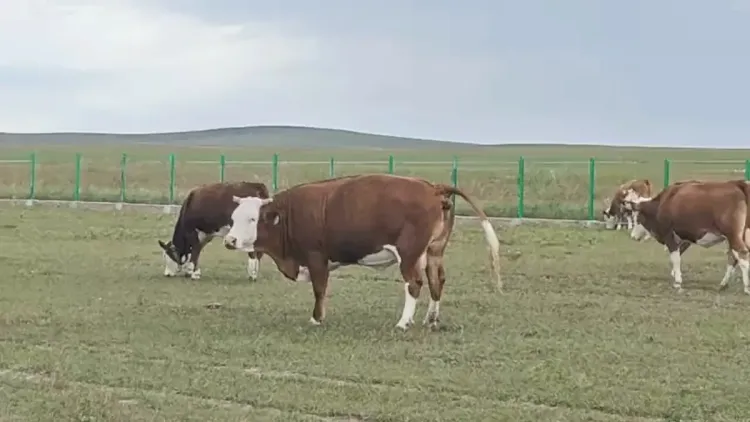
Ranch operations managing cattle across thousands of acres face unique herd monitoring challenges. Animals may be out of visual contact for days or weeks at a time, and traditional monitoring methods simply do not scale to extensive grazing systems. For these operations, location tracking and remote health surveillance are the primary monitoring priorities.
GPS-enabled smart collars report positions every 1–30 minutes depending on model, supporting virtual fencing awareness, water source utilization tracking, and alerts when animals breach property boundaries or separate from the herd — behavior that may indicate injury, illness, or predator pressure. Combined with eartag-based temperature and activity monitoring reported through the Herdwize gateway, ranch operators gain visibility into animal welfare and location that was previously impossible without daily horseback or ATV rides across the property.
The private LoRa network architecture is particularly well suited to ranch operations. A single gateway covers a 5 km radius in open areas, which reaches the core grazing area of many operations; hills, tree lines and buildings reduce that range. For larger or hilly properties, additional gateways on high ground extend coverage, all feeding into the same analytics platform.
ROI and Economic Impact of Herd Monitoring
The economic case for herd monitoring rests on measurable improvements across several categories. While the specific returns vary by operation type and size, the following value drivers are consistently documented across commercial deployments.
- Reproductive efficiency: Automated estrus detection and optimal AI timing improve conception rates by 15–25% and reduce average days open by 15–25 days. In dairy operations, this translates to $50–$125 per cow annually. In beef operations, it reduces the percentage of open cows at pregnancy check by 5–10 percentage points.
- Health management: Early detection reduces treatment costs by 40–60% per event and lowers mortality rates by up to 50% in high-risk groups. For feedlot and stocker operations with BRD exposure, the savings from early detection alone can exceed the cost of the monitoring system.
- Labor efficiency: Automated monitoring reduces observation labor by 30–50%, freeing skilled staff from repetitive pen-walking and heat-checking duties to focus on animal handling, treatment, and management decisions. For operations paying $18–$25/hour for experienced labor, the savings are substantial.
- Feed optimization: Rumination monitoring detects subclinical acidosis and ration issues within hours, enabling rapid nutritional adjustments that recover $15–$30 per head in feed conversion savings.
- Reduced losses: Calving prediction, escape detection, and continuous welfare monitoring prevent losses that are difficult to quantify in advance but devastating when they occur — from calf mortality due to unattended dystocia to cattle lost through fence breaches or undetected injuries on remote pastures.
Getting Started with Herd Monitoring
Implementing herd monitoring is a strategic decision that benefits from a structured approach. The most successful deployments follow a phased implementation model that starts with a defined pilot group and expands based on validated results.
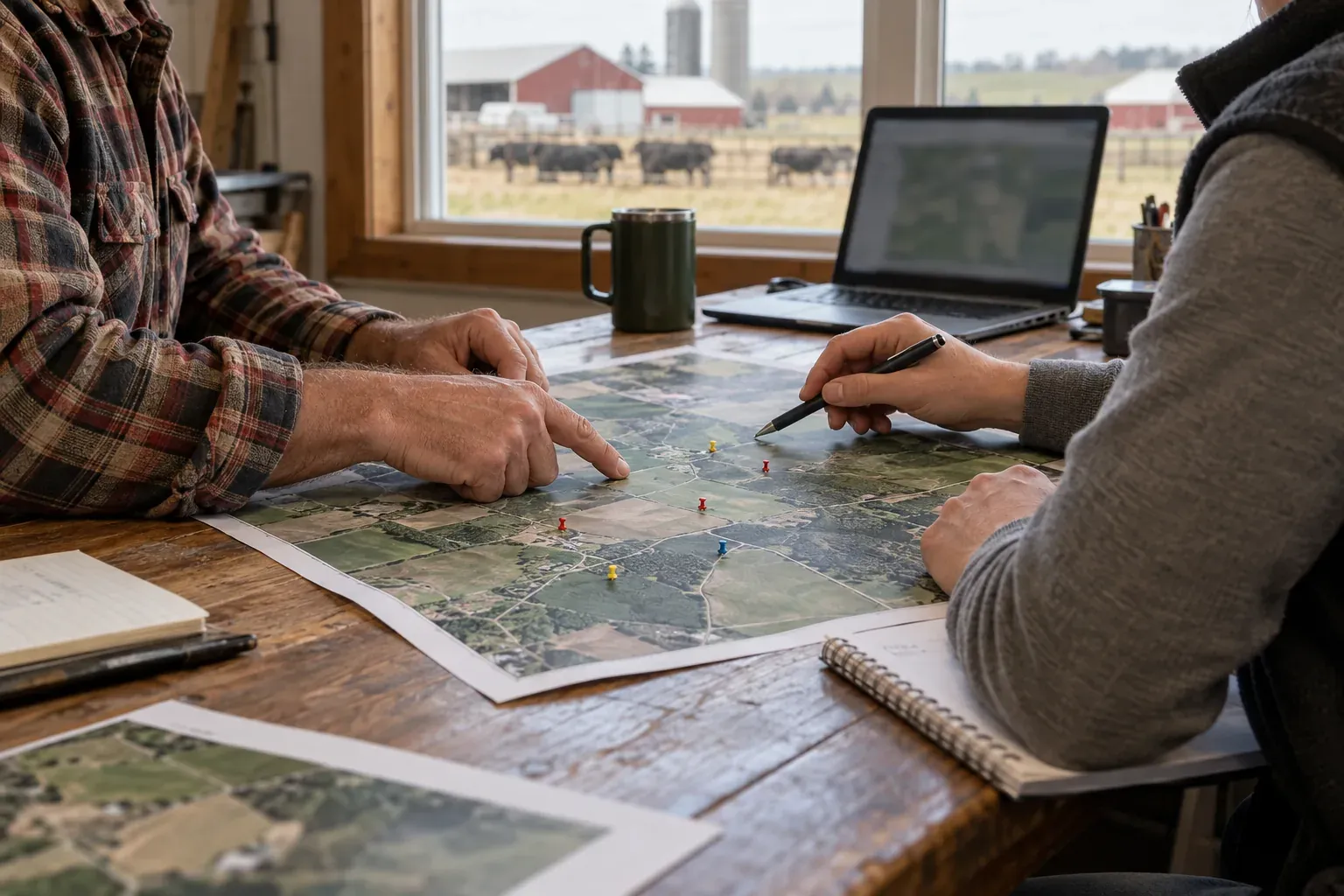
Begin by identifying the primary value driver for your operation — whether that is reproductive efficiency, health management, labor reduction, or loss prevention. This determines which animal groups to monitor first and what success metrics to track. Deploy sensors on 50–100 animals in the highest-value group, establish baselines over 7–14 days, and define the response protocols that will translate alerts into actions. Once the pilot validates the technology and workflow, expand to additional groups based on per-animal ROI priority.
Network infrastructure deserves particular attention during planning. A single Herdwize LoRa gateway covers a 5 km radius in open areas, which suits many single-site operations, but larger or hilly properties and operations with multiple sites should map coverage requirements before deployment. The advantage of private network infrastructure is that it scales incrementally — additional gateways can be added as monitoring expands to new areas of the property.
Frequently Asked Questions
What is herd monitoring and how does it work for cattle?
How much does a herd monitoring system cost per animal?
Can herd monitoring systems work on remote pastures without cellular coverage?
How long does it take to see results after deploying a herd monitoring system?
What is the difference between activity-only monitors and full herd monitoring platforms?
Ready to Transform Your Herd Monitoring?
Learn how Herdwize's integrated platform — smart eartags, private LoRa network, and AI analytics — delivers continuous visibility into every animal in your herd.
Request a Platform Briefing