Key Takeaways
- A dairy herd monitoring system pays for itself within 4-6 months by reducing missed heats, catching disease early, and cutting labor costs
- Each missed estrus cycle costs $500-$800 in lost milk revenue and extended calving intervals
- Multi-sensor platforms achieve 90-95% heat detection accuracy, nearly double visual observation rates
- Continuous temperature and activity monitoring detects health issues 48-72 hours before clinical symptoms appear
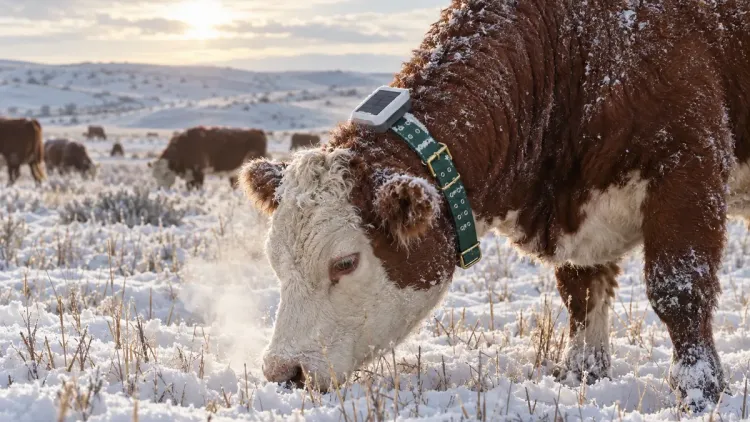
- Modern eartag-based systems like Herdwize's weigh just 9–12.5 g and run 2–4 years on a button cell, sized so the battery never needs replacing while the tag is on the cow
A dairy herd monitoring system is a technology platform that continuously tracks the health, reproductive status, and behavior of every cow in a dairy operation using IoT sensors, wireless connectivity, and data analytics. Unlike manual observation, which captures a snapshot of herd status during brief inspection windows, a modern dairy herd monitoring system collects data around the clock and uses machine learning algorithms to generate actionable alerts for heat detection, health anomalies, rumination changes, and calving prediction. For commercial dairy operations, choosing the right system is one of the most impactful technology decisions a producer can make.
This buyer's guide breaks down the core capabilities you should evaluate, provides a decision matrix for comparing platforms, and offers deployment guidance tailored to parlor-based, pasture-based, and freestall dairy operations. Whether you manage 200 cows or 5,000, the framework here will help you make a confident, data-driven purchasing decision.
Why Dairy Operations Need a Dedicated Monitoring System
Dairy herds face a unique set of management challenges that make continuous monitoring especially valuable. Unlike beef operations where cows spend most of their time on pasture with relatively minimal intervention, dairy cattle cycle through parlors, freestall barns, feeding lanes, and holding pens multiple times per day. Each of these environments creates stress points that affect health and reproduction. A dairy herd monitoring system designed for these workflows captures the signals that matter most to milk producers.
The economics of dairy are unforgiving. Milk production is tightly correlated with days in milk, which means that every day a cow is open beyond the voluntary waiting period costs the operation revenue. Research from Cornell University and the University of Wisconsin estimates that each additional day open beyond 120 DIM costs between $3 and $5 per day in lost production and increased maintenance costs. For a 500-cow herd averaging 150 days open instead of 120, that adds up to more than $45,000 annually in avoidable losses.
Core Capabilities to Evaluate in a Dairy Herd Monitoring System
Heat and Estrus Detection
Reproductive efficiency is the single largest economic driver in dairy operations, and heat detection is where most monitoring systems deliver their fastest payback. Modern high-producing dairy cows exhibit standing heat for as little as 6-8 hours, with up to 70% of mounting activity occurring at night. Visual observation in commercial dairy herds catches only 50-60% of estrus events, meaning that even well-managed operations miss nearly half of all breeding opportunities.
A dairy herd monitoring system with multi-sensor estrus detection combines accelerometer activity data, core body temperature changes, and behavioral pattern analysis to achieve 90-95% detection accuracy. The best systems identify not just that a cow is in heat, but provide an optimal insemination timing window, which directly improves conception rates. Silent heats, which are common in high-producing Holsteins and are invisible to visual observation, are reliably detected through the temperature and activity changes that accompany ovulation regardless of external behavioral expression.
Health and Disease Alerting
Dairy cattle are susceptible to a cluster of metabolic and infectious diseases that are especially costly because they directly reduce milk output. Early disease detection is critical for managing these conditions before they become clinical emergencies. The key dairy-specific health threats that a monitoring system should detect include:
- Mastitis — the most expensive disease in dairy, costing $150-$300 per clinical case. Subclinical mastitis is even more insidious, silently reducing milk yield by 10-20% without obvious symptoms. Monitoring systems detect the activity reduction, feeding behavior changes, and temperature elevation that precede clinical mastitis by 24-48 hours.
- Ketosis — affects 15-30% of early-lactation cows. Subclinical ketosis reduces milk yield, impairs reproduction, and predisposes cows to displaced abomasum. Rumination decline and reduced feed intake are the earliest detectable signals, appearing 48-72 hours before blood ketone levels become clinically elevated.
- Displaced abomasum — requires surgical correction costing $300-$500 plus lost production. The characteristic drop in rumination time and feed intake that precedes DA can be detected 2-3 days before clinical diagnosis.
- Lameness — the third most costly condition in dairy after mastitis and reproductive failure. Activity and lying behavior changes associated with foot lesions are detectable through accelerometer data well before a cow becomes visibly lame.
Rumination Monitoring
Rumination time is arguably the most important continuous metric for dairy cattle management. A healthy dairy cow ruminates 450-550 minutes per day, and deviations from this baseline are among the earliest and most reliable indicators of health, nutritional, and environmental problems. Unlike activity data, which can be affected by facility design, pen moves, and social dynamics, rumination is a highly consistent individual behavior that produces a clear, stable baseline.
For transition cow management — the critical period from 3 weeks pre-calving to 3 weeks post-calving when the majority of metabolic diseases occur — rumination monitoring is indispensable. A drop in rumination of more than 30% from baseline in a fresh cow is a strong predictor of metabolic disease and warrants immediate investigation, often 48-72 hours before clinical signs appear. Herdwize eartags measure body temperature and activity today; rumination monitoring is on the Herdwize roadmap.
Activity Tracking and Behavior Analysis
Beyond its role in heat detection, continuous activity tracking provides insights into cow comfort, lameness prevalence, pen-level management issues, and the impact of management changes on herd behavior. Group-level activity analysis can reveal problems with stocking density, bedding quality, or ventilation that affect the entire pen rather than individual animals.
| Monitoring Capability | Importance for Dairy | What to Look For | Impact on Profitability |
|---|---|---|---|
| Heat / estrus detection | Critical | Multi-sensor fusion (activity + temp), optimal AI timing, silent heat detection, individual baselines | $500-$800 saved per detected heat; 20-30 day reduction in days open |
| Health & disease alerts | Critical | 48-72hr advance warning, dairy-specific disease models (mastitis, ketosis, DA), low false-positive rate | 50-70% reduction in treatment costs; lower mortality and culling |
| Rumination monitoring | Critical | Minutes-per-day tracking, individual baselines, transition cow alerts, feed change impact analysis | Early metabolic disease detection; optimized ration management |
| Activity tracking | High | 3-axis accelerometer, lying time and bouts, lameness scoring, pen-level aggregation | Early lameness detection; improved cow comfort metrics |
| Calving prediction | High | 12-hour prediction window, temperature drop detection, activity pattern change, automated staff alerts | Reduced dystocia losses; lower calf mortality; less overnight labor |
| Milk yield correlation | Medium-High | Integration with parlor data, per-cow yield trending, deviation alerts tied to health events | Faster identification of subclinical mastitis and nutritional issues |
| Group behavior analysis | Medium | Pen-level activity and rumination trends, heat stress detection, management change impact scoring | Facility and management optimization; heat stress mitigation |
Hardware Considerations for Dairy
The sensor hardware is the foundation of any dairy herd monitoring system, and dairy environments place unique demands on device design. Parlor wash-down cycles, aggressive cleaning chemicals, and constant exposure to moisture mean that IP ratings and material durability are not just specifications — they determine whether your investment survives its first year.
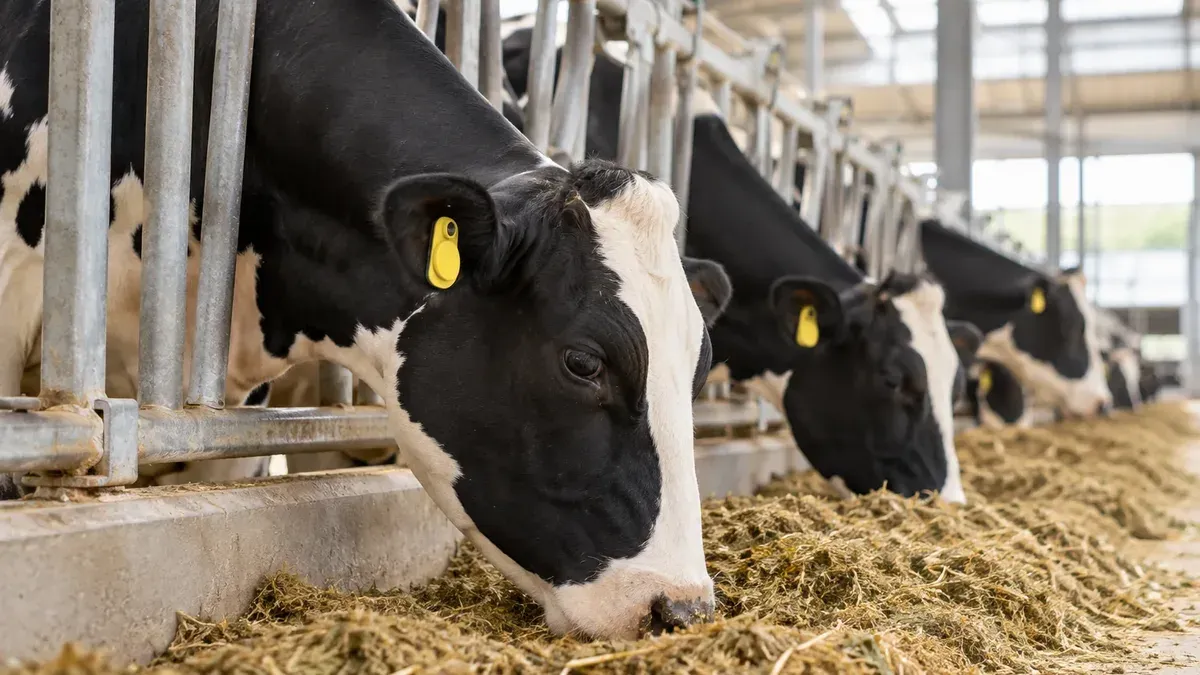
Eartag-based sensors have become the preferred form factor for dairy monitoring because they do not interfere with milking equipment, feed barriers, or headlocks. The Herdwize Smart Eartag weighs just 9–12.5 grams depending on the model, carries an IP67 rating for full dust and water immersion protection, and pairs an integrated pedometer with a precision temperature sensor (±0.1 °C in the 36–38 °C range). With a 2–4 year battery and reporting through the Herdwize gateway on a private farm network, it removes the dependence on cellular coverage that rarely reaches rural dairy operations.
When evaluating hardware, pay close attention to the total sensor payload. Systems that rely solely on movement data for activity tracking can detect heat and basic behavior changes, but they miss the body temperature data that is essential for dairy-specific health monitoring. A multi-sensor approach delivers significantly more value per device, reducing the total cost of monitoring by consolidating what would otherwise require multiple separate systems.
Connectivity and Network Architecture
A dairy herd monitoring system is only as reliable as the network that connects sensors to the analytics platform. Dairy operations present specific connectivity challenges: metal buildings attenuate wireless signals, parlor environments create electromagnetic interference, and operations spread across multiple buildings need seamless coverage.
Private LoRa networks have emerged as the preferred connectivity solution for dairy monitoring. A single Herdwize gateway covers a 5 km radius in open areas; buildings and tree lines reduce that, but most dairy operations still need only 1-2 gateways for complete coverage across barns, pastures, and holding areas. The network is entirely self-contained, requires no cellular subscription fees, and operates independently of carrier infrastructure — a critical advantage for rural dairy regions where cellular coverage is unreliable or nonexistent.
Deployment by Facility Type
Parlor-Based Operations
Parlor-based dairies benefit from the natural flow of cattle through a central collection point multiple times per day. Gateway placement near the parlor and holding area ensures that every tagged animal passes within close range at least twice daily, providing high-quality data uploads even in large operations. For herringbone and parallel parlors, mounting the LoRa gateway in the parlor building itself captures data from every cow during milking.
The key deployment consideration for parlor operations is ensuring coverage extends to dry cow pens and calving areas, which are often located in separate buildings or outdoor lots. These are precisely the areas where calving prediction and transition cow health monitoring deliver the most value, so gateway coverage must reach these zones. A second gateway positioned to cover dry cow facilities typically solves this requirement.
Pasture-Based Dairy
Pasture-based dairy operations, common in New Zealand-style grazing systems and parts of eastern Canada, present longer range requirements but simpler infrastructure. Cattle move across large paddock rotations and may be kilometers from the dairy shed. The 5 km open-area radius of each Herdwize LoRa gateway suits these operations: a single elevated gateway can often cover a compact grazing platform, and larger or hilly farms add gateways on high ground.
For pasture-based systems, the dairy herd monitoring system's heat detection and health alerting capabilities are especially valuable because cattle are less frequently observed by staff. A cow showing early signs of mastitis or metabolic disease on a distant paddock will generate an alert that brings her to attention hours or days before she would otherwise be noticed during the next milking.
Freestall and TMR Operations
Large freestall operations with total mixed ration (TMR) feeding represent the highest-density dairy environment and the one where group behavior analysis delivers the most insight. With hundreds of cows in a single pen, individual observation is impractical. A dairy herd monitoring system replaces the need for pen riders to visually assess every cow by flagging individuals whose activity or temperature deviates from their baseline.
In freestall barns, gateway placement is straightforward — one or two gateways mounted inside or on the exterior of the barn provide complete coverage. Metal roofing and sidewalls do reduce LoRa range, so gateways work best mounted with a clear path to the pens. For multi-barn operations, additional gateways are added as needed, all connecting to the same cloud platform for unified herd visibility.
Freestall operations also benefit from pen-level analytics. When the monitoring system aggregates activity and temperature data across all cows in a pen, it can detect the impact of ration changes within hours, identify heat stress events affecting the group, and quantify the disruption caused by pen moves or regrouping — insights that drive immediate management decisions and long-term facility improvements.
Integration with Dairy Management Software
A dairy herd monitoring system should complement your existing herd management software, not replace it. Look for platforms that integrate with DHIA records, parlor systems, and reproductive management protocols. The monitoring platform should push alerts and data into your existing workflow rather than requiring staff to check a separate dashboard.
Key integration points to evaluate include: automated breeding lists synced with AI technician schedules, health alert routing to veterinary staff, activity and temperature data export for nutritionist review, and parlor data import for correlating milk yield with sensor-detected health events. The goal is a single source of truth for cow-level data that combines production records with real-time behavioral and physiological monitoring.
Calculating ROI for Your Dairy Operation
The return on investment from a dairy herd monitoring system comes from four primary sources: improved reproductive efficiency, earlier disease intervention, reduced labor for observation tasks, and better-informed culling decisions. For a typical 500-cow dairy:
- Heat detection improvement: Moving from 55% to 92% detection captures approximately 185 additional heats per year. At $500-$800 per missed cycle, the reproductive value alone exceeds $90,000-$150,000 annually.
- Health cost reduction: Early detection of mastitis, ketosis, and other conditions reduces average treatment costs by 50-70% and cuts disease-related culling. Conservative estimates place this at $15,000-$25,000 per year for a 500-cow herd.
- Labor savings: Automated monitoring reduces the time spent on visual heat checking, health observation, and calving surveillance by 2-4 hours per day, which translates to $15,000-$25,000 annually in labor costs.
- Culling optimization: Better health and reproductive data enables more strategic culling decisions, keeping productive cows in the herd longer and removing problem animals sooner.
With total annual benefits of $120,000-$200,000 for a 500-cow operation and system costs that are a fraction of that figure, most dairy producers achieve full payback within 4-6 months. Subscription-based pricing models, which eliminate large upfront capital expenditures, make the economics accessible even for smaller operations that might not justify a six-figure capital purchase.
Frequently Asked Questions
What is the difference between an activity monitor and a full dairy herd monitoring system?
How long does it take to deploy a dairy herd monitoring system across a 500-cow herd?
Do eartag sensors interfere with milking parlor equipment or headlocks?
Can a dairy herd monitoring system work without cellular coverage?
What ongoing costs should I expect beyond the initial purchase?
Find the Right Dairy Herd Monitoring System for Your Operation
See how Herdwize's multi-sensor platform delivers heat detection, health alerting, and temperature and activity monitoring in a single 9–12.5 g eartag — with no upfront capital cost.
Request a Platform Briefing